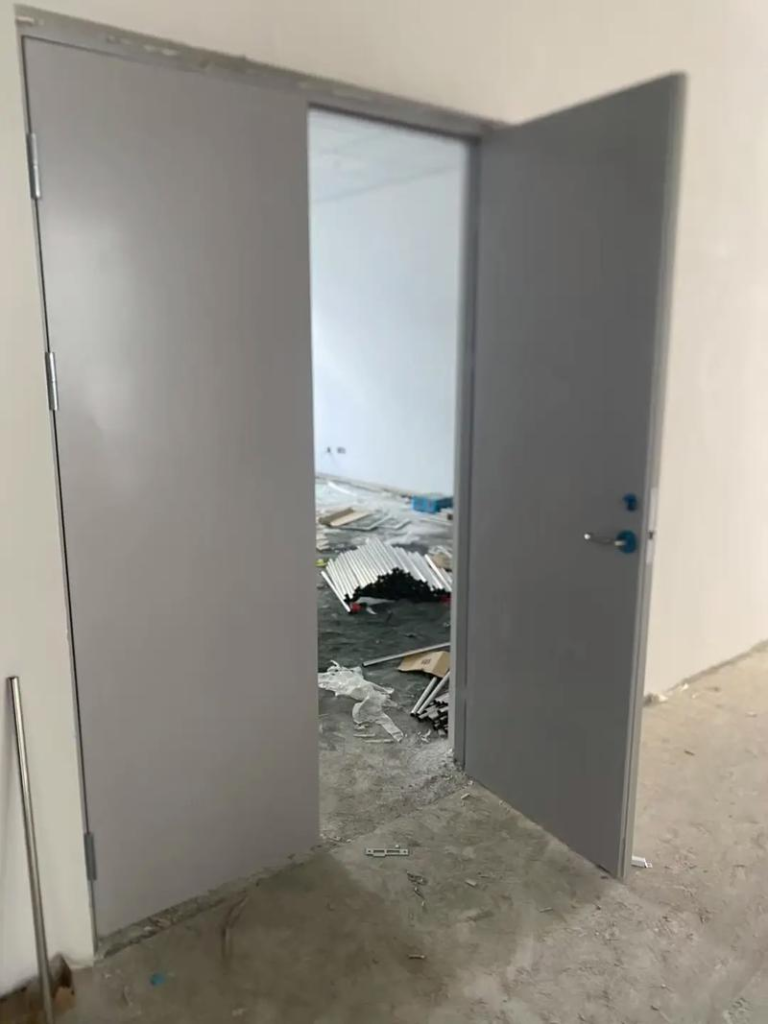
In major construction projects across the Middle East, engineers often face a critical challenge: how to prevent a steel door from warping and leaking smoke during a high-intensity fire. The solution lies in the Intumescent Fire-Resistant Core. Here is a technical breakdown of this material in a professional encyclopedia format.
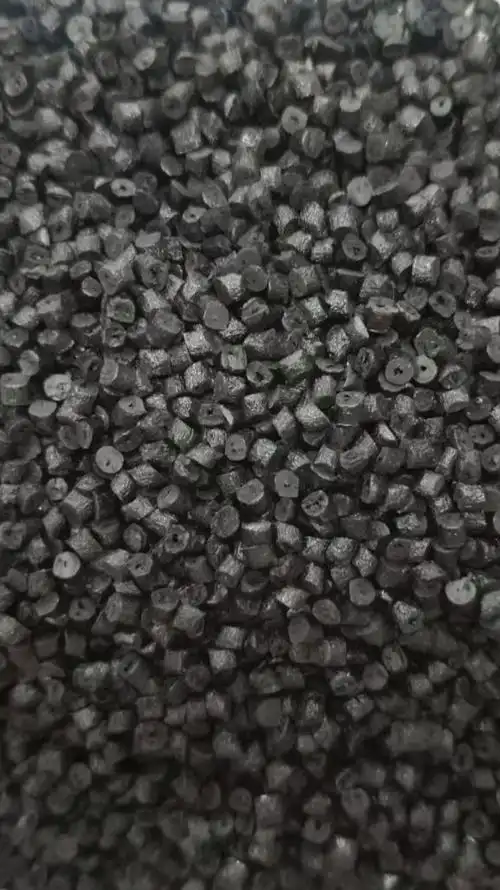
1. Material Classification: Reactive Inorganic Composite
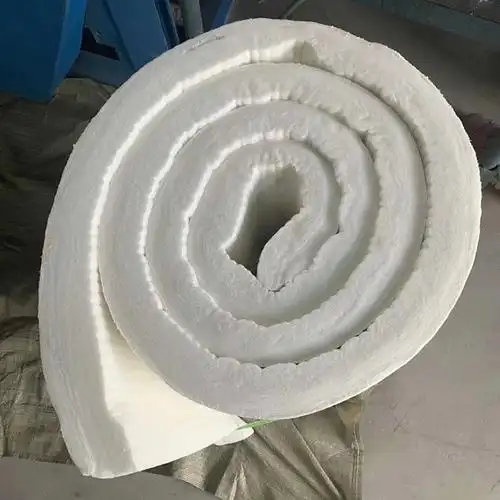
The intumescent core used in steel fire doors is scientifically classified as a Reactive Inorganic Composite Material. Unlike static insulation (such as rock wool or perlite), this material is “active,” meaning it remains dormant until it senses a specific temperature threshold.

The primary components typically include:
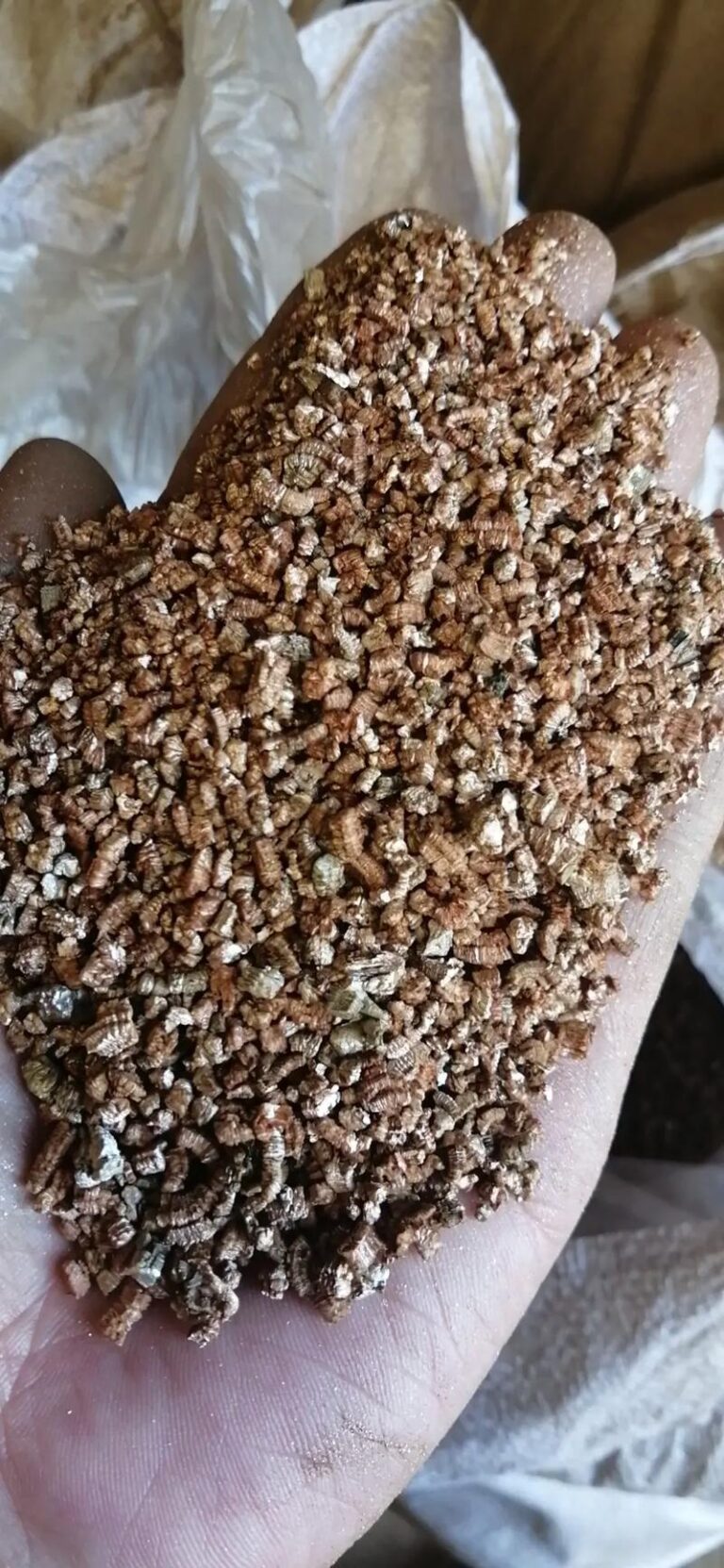
- Expanded Vermiculite: A natural mineral that contains microscopic layers of water. When heated, the water turns to steam, causing the mineral to expand like an accordion.
- Inorganic Binders: Sodium silicate or magnesium silicate used to press the minerals into a stable, solid board.
- Expandable Graphite (Optional): Often added to high-performance cores to increase “expansion pressure,” ensuring the material can push against heavy steel frames.
- Reinforcing Fibers: Glass fibers or specialized anti-crack fibers that ensure the “char” layer stays together after expansion.
2. Working Mechanism: From Passive Shield to Active Seal
The “Intelligence” of this material lies in its physical transformation during a fire:
- The Activation Phase: Once the ambient temperature reaches approximately 200°C (392°F), the chemical reaction triggers.
- Volumetric Expansion: The core expands significantly—often 5 to 30 times its original volume.
- Gap Sealing: As the steel door leaf begins to warp slightly due to extreme heat, the expanding core fills the internal cavities and pushes outward against the door frame.
- Creation of a Thermal Barrier: The resulting expanded material forms a dense, multi-layered “char” with extremely low thermal conductivity, blocking heat radiation and lethal toxic smoke.
3. Key Technical Specifications
When reviewing material safety data sheets (MSDS) or project submittals, contractors should focus on these three indicators:
- Expansion Ratio: The factor by which the material grows. A higher ratio ensures better sealing of large structural gaps.
- Activation Temperature: Ideally set between 180°C and 250°C. If it’s too low, the core might activate in the extreme 50°C summer heat of the Gulf; if too high, it reacts too slowly to a fire.
- Residual Char Strength: The expanded material must be strong enough to withstand the high-pressure air currents (the “chimney effect”) found in burning buildings.
4. Why is this Material Critical for Steel Doors?
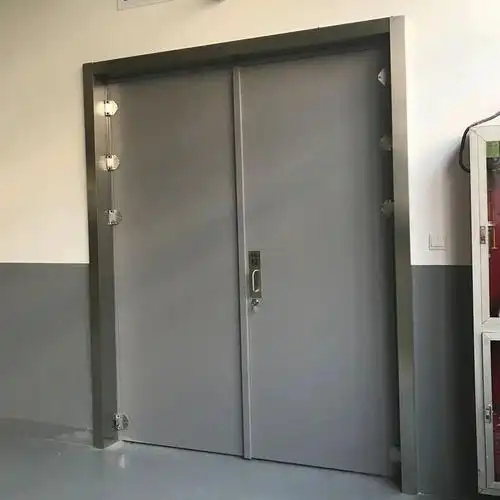
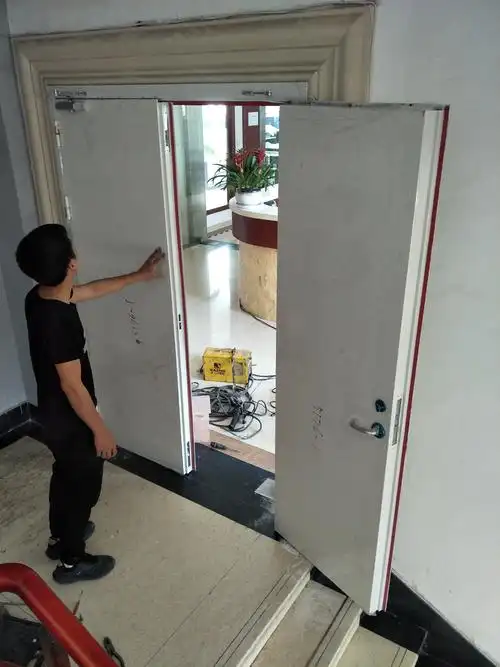
Steel is an excellent conductor of heat and expands when hot, which can cause the door to twist and leave gaps between the leaf and the frame. The intumescent core is the only material that can “grow” with the fire, dynamically filling those gaps to maintain a smoke-tight seal for 60, 90, or 120 minutes.
Technical Summary:
The intumescent core of a steel fire door is an Inorganic Vermiculite-based Composite. It serves as a life-saving “active” system that transforms from a solid board into a dense thermal shield, ensuring the integrity of the fire barrier and the safety of evacuation routes in high-rise and industrial infrastructure.